I understand the Health Select Committee is due to report on the Gene Technology Bill in the next few days. It appears that there have been vested interests lobbying NZ First to support the Bill. It is entirely premature to vote ‘yes’ to gene technology deregulation prior to the report of the Royal Commission on Covid Phase Two which is considering the safety of Covid vaccines. Almost daily there are studies being published which have found long term adverse effects of experimental medical uses of gene technology.
For example a group of scientists in Japan just released an analysis of 21 million vaccine and health records which demonstrates that around 610,000 people died in Japan unexpectedly subsequent to the Covid shots with a peak death rate occurring after 90-120 days. The time interval to the death peaks shortened if you received boosters. This massive effect size was missed until now because few among the medical community believed that deaths occurring 3 to 4 months after the shot could be related to the vaccine. The analysis puts this fallacy to rest. Covid vaccines have prolonged serious adverse effects.
In fact the application of simplistic models to gene technology medicine has already led us to a world with serious problems resulting from interventions that are sold as solutions. A paper entitled “Evaluating Vaccine Effectiveness During the COVID-19 Pandemic: Insights from Statistical and Machine Learning Methods“, has found that contrary to expectations, vaccinated individuals lost 40% more working days due to Covid infection than their unvaccinated counterparts (p<0.0001). But the vaccinated were not just taking a higher number of days off work, they were also dying in greater numbers as a study entitled Paradoxical increase in global COVID-19 deaths with vaccination coverage: World Health Organization estimates (2020–2023) published in April of this year concludes: “The Americas (39.8%) and Europe (34.1%) accounted for more than 70% of global COVID-19 deaths despite high vaccination”. Moreover Covid deaths increased when Covid vaccination began belatedly on continents like Africa.
These figures point to increasingly faulty modelling of the potential effects of gene technology medical interventions when compared to actual outcomes. A narrow focus on a highly simplified effect pathway of a biotech medicine has led evaluators to ignore physiological and genetic complexity which is highly likely to lead to long term adverse effects. The Annual Results Summary by Southern Cross insurers up to 30 June 2024 reports that in 2019 33% (one third) of its members made a health claim under their policies. In 2024, 50% (half) claimed. That represents a whooping 50% increase in sickness or to put it more starkly, 158,000 more sick Southern Cross clients. Since Southern Cross only covers 20% of the New Zealand population, this figure scales up to a massive 788,000 more sick Kiwis in 2024 compared to 2019. That is an extra 15% of the population getting sick in 2024 who wouldn’t have been ill in 2019.
I hardly need to point out to you that it is now virtually certain that Covid escaped from a biotechnology lab in China. This means that both the Covid vaccines and the disease itself were a result of biotechnology experimentation. The implications of the failures of biotechnology medicine have not been lost on investors whose decisions provide us with advance notice of risk and effectiveness.
According to authoritative pharmaceutical industry online Endpoints News “The opening months of 2025 have offered no respite to the chilly biotech market of the last few years, biotech correspondent Kyle LaHucikreported this week. Despite the comeback everybody seems to want, there’s been a steady drumbeat of restructurings, pipeline cuts, layoffs and short-lived pivots. Kyle highlighted iTeos Therapeutics, once a darling of the anti-TIGIT class of biotechs, as an embodiment of the current struggles. iTeos had a clinical failure and lost a partnership with GSK this spring. It’s now shut down.”
In another example Sarepta Therapeutics’ gene therapy, Elevidys, for Duchenne muscular dystrophy (DMD) has faced setbacks, including a second patient death and a trial failure, leading to a significant drop in the company’s stock value. The deaths, both involving acute liver failure, occurred in patients receiving the therapy in clinical trials. This has prompted Sarepta to pause dosing for non-ambulatory patients and review its cost structure.
I am writing to urge your NZ First Health Select Committee member to vote to postpone approval of the Gene Technology Bill as it relates to both medical applications and crop releases. It is sensible to await the consideration of the Royal Commission before taking steps which will enshrine automatic approvals and emergency use of gene technology in NZ law. These and other provisions of the Bill threaten to override the protections contained in the NZ Bill of Rights and ignore the results of research on safety and risk assessment of gene technology.
The concerning spectacle last week of the public hearings of the Royal Commission on the COVID-19 Pandemic Phase 2 deserves some analysis.
The counsels for the Commission appeared determined to undermine or even attack the credibility of witnesses raising concerns about the COVID-19 vaccine. Clearly, the published scientific evidence of adverse effects was not being taken seriously or had not yet been studied in detail. At one point the Commission’s counsel suggested that temporal association between the vaccination date and adverse effects, including deaths, was insufficient to prove causality. The apparent intention was to create doubt, when actually there is virtual scientific certainty. Those giving evidence acquitted themselves well despite being deliberately restricted from citing examples. However, inevitably we were left with the perception, real or not, that those guiding the Commission process had already made up their minds, if not the Commissioners themselves.
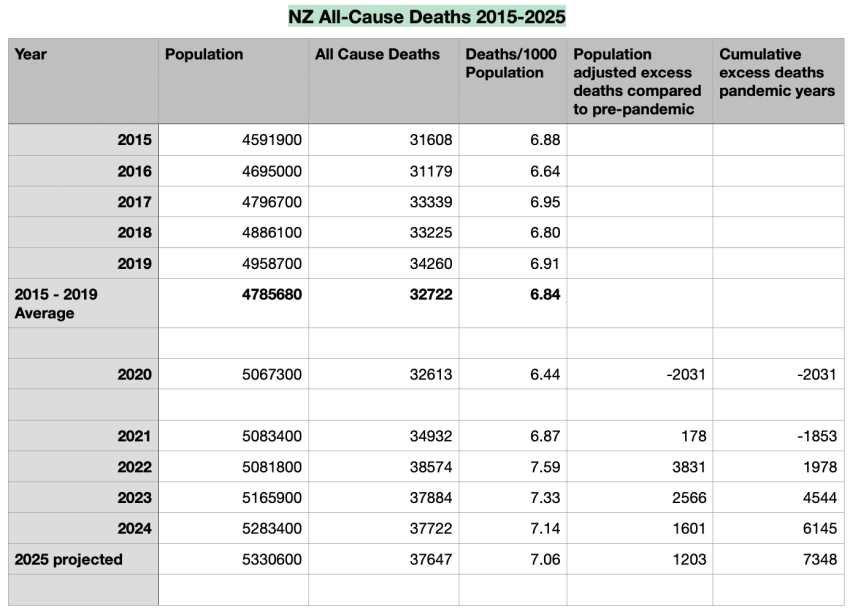
The raw official figures for all cause deaths in New Zealand
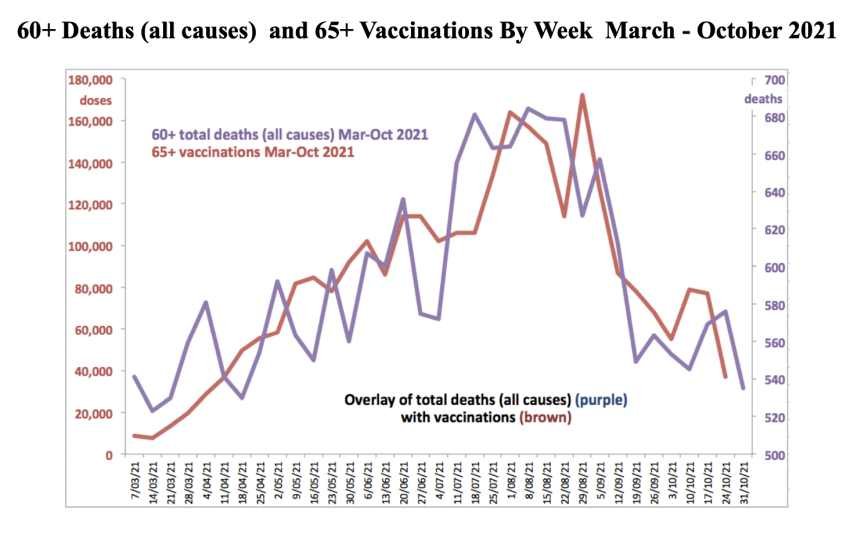
During 2020 and most of 2021, there were virtually zero cases of COVID-19 infection in New Zealand. This was well controlled by tight border closures, quarantine, lockdowns, efficient track and tracing. As a result, New Zealand largely escaped the more serious alpha and delta variants of COVID-19. We also escaped seasonal influenza. Therefore, all cause deaths in 2020 were well below the historical average, more than 2000 below the expected number. Near identical measures continued for the majority of 2021, except for Pfizer mRNA COVID-19 vaccinations, which began in March. There was little COVID-19 and little influenza in 2021, but deaths rose in tandem with the vaccine rollout to pre-pandemic levels and above.
Was this caused by the vaccinations? There are many indications that this was the case. The Hatchard Report completed a time series analysis comparing weekly vaccinations and all-cause deaths among over 60’s in 2021 and found a positive significant relationship. This effect size is commensurate with deaths data leaked by Health New Zealand IT employee turned whistleblower Barry Young. Peaks of deaths correspond with peaks in vaccination rates. In 2022 and 2023 this kind of correspondence continued during peak administration of COVID-19 vaccine boosters. Multiple subsequent published scientific studies in a number of journals and countries have connected COVID-19 vaccination with increases in a range of potentially fatal conditions including heart conditions, immune deficiency, mental deterioration and neurological illness. All of these papers have been submitted to the Commission.
As time rolled on, excess deaths beyond the historical rates continued at high levels and accumulated. By 2022 the cumulative totals far outweighed any effect of the low death rate in 2020. By 2025 the cumulative total of excess deaths now stands at 7,348 even after the effect of a rising population is accounted for. No one on either side of the argument disputes this total. The number of deaths directly caused by COVID-19 during the period 2020 to 2025 is estimated to be around 3,000. So what caused the other approximately 4,000 deaths? Herein lies the central misunderstanding which surfaced during the Commission hearings. For various reasons, some people still feel against accumulating evidence that almost all the New Zealand excess deaths must have been COVID-19 infection related, rather than due to adverse effects of COVID-19 vaccinations. The Commissioners and their counsels, who are not scientifically qualified, may find themselves caught between these two opposing views which are being vigorously promoted, not just in New Zealand but around the world, by their respective proponents.
Let’s pause here and step back to the bigger picture. Intelligence services around the world along with a significant cohort of independent expert scientific opinion have concluded from the epidemiological evidence and genetic analysis of the COVID-19 virus that it originated at and escaped from a virology lab in Wuhan China. Whether this is beyond doubt or almost certain is immaterial at this point, the implications of this need to be considered very seriously. It is certainly now established that researchers at Wuhan were conducting gain of function research to make deadly versions of coronaviruses. They apparently succeeded. If this is the case, as seems highly probable, all 7,348 excess deaths in New Zealand were caused by biotechnology experimentation. In this light, the pyrotechnics at the Royal Commission hearings last week appear to be the result of an immature understanding of what is at stake. The counsels for the Commission were attacking witnesses with whom they should have been taking common cause. Whether it was the vaccine or COVID-19 or both, it was all caused by biotechnology experimentation. From this perspective, all 5 million of us are victims.
Moreover, the current initiative of the New Zealand government to deregulate biotechnology appears to be a disastrous course of action. We need to dig deeper into this to find out how it is that our nation, which has just lost, and is still losing, many of our best, has been left with a population divided and blaming each other while our government is rewarding the real culprits with extra plaudits, powers, freedoms, resources, and money. There are even some who submitted to or appeared before the Commission who suggested that the protections contained in New Zealand Bill of Rights were and are an impediment to Government policy. This is a perspective worthy of 1930s Germany which should be opposed and rejected outright.
If you sit down with a mind uncluttered by the pressures of the last few years, it is clear that some biotechnologists were recklessly and deliberately creating a deadly disease. The risks involved should have been clear even to a passing evaluation. In this light we have to conclude that those involved were not just criminals but rather had complete disregard for the safety of the human race. They were prepared to endanger its survival. But it wasn’t just a few people, gain of function research was being widely undertaken and still is. Embedded within the biotechnology industry is a desire to push experimentation in reckless directions far beyond the boundaries of current knowledge and in the face of obvious risks. Moreover it is widely known that the consequences of genetic modification cannot be contained, recalled or remediated.
It seems there are people living in plain sight within our society for whom the risk or in some cases even the desirability of disaster, death and destruction have become normalised. This is certainly true of the armaments industry and now appears true of what is wrongly paraded as a new wave of beneficial medical biotechnology fraught with high rates of adverse effects including death and long term serious consequences. The linkage between military strategy and biotechnology experimentation is known. In April 2024, a team of biodefense experts gathered in Washington, D.C. to prepare for the unthinkable—biowarfare on a global scale. Yet around the world we are being schooled to believe that those involved are our saviours.
Behind the theatre of the Royal Commission hearings there is a lesson to be learned. Biotechnology experimentation is not saving lives, it is taking them. These are strong words, but there are hard facts in need of rational discussion and recognition. So far it seems the Commission is not capable of entertaining this central lesson of the pandemic.
The Hatchard Report has requested a meeting with the Commissioners but received no reply.
An article in the UK Guardian on 29th June is entitled “Calls to clean up England’s ‘toxic air’ as GP visits for asthma attacks rise 45%“. It reports 45,458 GP visits for asthma during the first half of this year compared to 31,376 last year. That is a 45% rise. Prof Kamila Hawthorne, the chair of the Royal College of General Practitioners told the Guardian: “Air pollution is a major public health crisis which is often overlooked, but we know it can be responsible for a range of serious physical and mental conditions and will often exacerbate existing conditions in patients.”
A paper published by the BMJ examining 50 years of asthma trends reported that the annual increase in asthma incidence in the UK was typically below 1% with a peak level recorded among London children of 2% increase per year. Despite this, there has been no pressing of the emergency button in 2024, just “we really should do something about air pollution”. But air pollution has actually been on a downward trend for the last few decades. Therefore the idea that air pollution is to blame for a sudden 45% annual increase in asthma (at least twenty times larger than previously) would be laughable if it wasn’t for the fact that the suggestion verges on a criminal cover up.
In another example of medical authorities ignoring the very obvious, the Indian Council of Medical Research (ICMR) produced a report for the Indian Ministry of Health and Family Welfare published on 2 July. It reports there is no link between high rates of sudden death among previously healthy young Indian adults aged 18-49 and the COVID-19 vaccine. Instead it concludes “Analysis of data from the study indicates that heart attacks, or myocardial infarction (MI), continue to be the leading cause of sudden death in this age group,”
But what is different about the last few years? You don’t need me to tell you that these heart attacks, as we have previously reported, were likely caused or complicated by COVID-19 vaccination, especially as myocarditis (heart inflammation) is a recognised side effect of COVID-19 vaccines. How did the ICMR miss this:)? Have they just been sleep walking since 2021 or are they just trying to protect India’s nascent biotech research programmes and huge vaccine manufacturing industry?
An article published in the journal Cancers on 4 June 2025 entitled “Repeated COVID-19 Vaccination as a Poor Prognostic Factor in Pancreatic Cancer: A Retrospective, Single-Center Cohort Study” sheds some light on what is going wrong. It found that repeated COVID-19 booster vaccinations are associated with poorer overall survival in patients with pancreatic cancer—they die sooner. It suggests that the high levels of mRNA vaccine generated IgG4, geared to the COVID-19 spike protein, degrade cancer immune responses. In other words, mRNA vaccines alter the functional genetics of the immune system to respond in a particular specific manner which limits its general capacity to respond effectively to a broad range of serious diseases.
Now we can see the mistake, pathologists and physicians are not expecting a generalised weakness of the immune system, they are seeking a specific disease label. You may have let the oil and water in your car go too low and experience a breakdown. The mechanic tells you that you have a cracked engine head due to overheating. It is true that your engine died of a specific head failure, but the root cause is the lack of sufficient oil and water. An article in today’s NY Times entitled “Her Fevers Returned Every Day. Would Anything Stop Them?” describes a process of medical diagnosis in great detail. A young mother was experiencing recurrent debilitating fevers. A battery of tests lasting weeks failed to turn up a cause. The illness involved hyperactive lymph nodes. Eventually it was diagnosed as an abnormal immune reaction from a new and little understood disease which has been given a name ‘Kikuchi disease’. Her symptoms eventually reduced with prolonged rest. Nothing in the article mentions the very real possibility that COVID-19 vaccination might have played a role in degrading her immune responses.
Of course, the alarming statistics for heart disease and asthma are not isolated cases of massive rises in disease incidence since 2021. Others we have covered in previous releases include rates of disability, chest pain, mental Illness, kidney disease, stroke, low birth rate and high rates of menstrual difficulty, turbo cancers, ED visits, neurological illness and of course excess deaths. Health services like the NHS are so overwhelmed that they have begun sending patients overseas for treatment after waiting lists hit record highs. These alarming and unprecedented health statistics are all the hallmarks of a failing generalised immune response to illness.
So what happened? In case, like the medical establishment, you have forgotten (or wish to turn a blind eye), in 2020 a bioengineered disease escaped from a lab. In 2021 a bioengineered vaccine was administered to billions of people worldwide.
So what went wrong? The biotech paradigm that DNA is the alphabet of life which can be safely manipulated is a fiction created by an industry that desperately wants to play God. In fact, how the myriad of specific functions of DNA produce holistic effects are not understood by biotechnologists. DNA reproduces the mysterious harmony at the heart of the cosmos. 37 trillion cells working together in perfect harmony support human consciousness. How this happens or is even possible is a complete mystery to biotechnology. Yet they are going ahead and altering the fundamental parameters of human genetic function.
The obvious parallel is the phenomenon of quantum coherence whereby seemingly magical properties like superfluidity (frictionless flow) and superconductivity (resistance free electricity) emerge, defying the apparent limitations of Newton’s and Maxwell’s classical laws of physics. This occurs at low temperatures when atoms join together in unified seamless harmony.
Our immune system is designed to protect the uniformity of DNA so that the continuity of human identity and the flexibility of immune responses can be maintained. Interfering with this natural structure and function is a recipe for disaster.
What will happen next? Biotechnology experimentation on food and medicine is harming our health because it alters the genetic structure and function of some elements of some cells. This degrades not just immunity but the integrity of our human identity and unique individuality. The body ends up fighting itself to try to restore the uniformity of our genetics across all our cells. Hence the massive rises in autoimmune and immune deficient conditions. Inevitably, scientists are planning to progress on to germline genetic engineering—designer babies. Their reasoning is as obvious as it is faulty and dangerous. Geneticists are suggesting at international conferences that if all the DNA in all cells are altered, somehow a stable configuration will be reached. This twisted perspective ignores the deformities and health disasters which have already resulted from cloning and germline experiments on animals. Germline genetic engineering will damage all future generations. Read more about the dangers here.
What should we do? Take every opportunity to oppose biotechnology experimentation and genetic alteration of our foods and medicines. Recently we encouraged you to write to your MP and request a meeting to review theApril 2021Pfizer CUMULATIVE ANALYSIS OF POST-AUTHORIZATION ADVERSE EVENT REPORT. Here is the positive result of one of our subscribers which can be used as a template for an MP meeting.
“I explained [to my MP] that whenever a new drug is released, the manufacturer must provide the FDA with a report summarising the adverse events reported in the first 90 days. If the safety signal is too high the drug is usually withdrawn from the market. Then I showed him the report prepared by Pfizer on 30 April 2021, ‘Pfizer CUMULATIVE ANALYSIS OF POST-AUTHORIZATION ADVERSE EVENT REPORT‘ that Pfizer sent to the FDA, which showed 42,086 cases of adverse effects were submitted in the first 90 days after release of the Covid Vaccine, including 1,223 deaths. But they did nothing with it until they were compelled to release it by a Court following Freedom of Information (FOIA) litigation. When this report entered the public domain in December 2021, it was found to include nine closely typed pages of ‘adverse effects of special interest’. I then passed him the first page of the list of ‘adverse events of special interest’. As he started to read this closely typed list, he voiced an involuntary reaction which conveyed shock and deep concern. There was silence as he continued to absorb, line by line, in alphabetical order, the list of over 100 conditions, many of them serious, on the first page.”
Our subscriber had requested 15 minutes of his MP’s time when he arranged the meeting. He stayed talking with him for an hour, responding to question after question. Yet, despite his concern for his family, it became clear the MP felt powerless to change the track the Coalition is taking to deregulate biotechnology. He believed if he tried to discuss the vaccine, he would be sidelined by the political doctrine of his party leaders and he is probably right in this. The message is clear: we need to meet with as many MPs, opinion-makers and colleagues as possible to drive home the dangers and change the false political narrative that biotechnology is safe. If a critical mass of knowledge and concern is reached there can be the possibility of political change. To protect ourselves from future forced medical experimentation, we should ask that the New Zealand Bill of Rights be raised to constitutional status. We also need to ask that all foods, food additives and food processing aids be labelled clearly if they have been genetically altered in any way. Everyone has a right to know what goes in their food.
After five and a half years examining pandemic evidence, it is clear who should be winning the argument, but it is also apparent that attitudes have even hardened.
This week Tanya Unkovich resigned as an MP. Up until now she has been our advocate inside the government urging caution about biotechnology deregulation. It seems probable her unexpected resignation signals a determination on the part of the coalition, including NZ First, to ignore caution. There appears to be a growing determination to push ahead with the gene technology bill which will impose medical hegemony and genetic destruction on the whole population. There are overseas interests egging the government on. We are dealing with fanatics, for whom evidence can be ignored with impunity.
We will have to delve very deep into the structure of natural law to understand what is going on and how we can forge a path ahead.
We have issued over 500 articles to date, all of which contain references to scientific papers and reports, these describe severe damage to public health much of which appears to be associated with the growing use of biotechnology. In the latest example, the UK adult psychiatric morbidity survey published on 26 Jun 2025 by the NHS has found that “one in four young people in England now have a mental health condition”, rising by 37% between 2014 and 2024. Conditions including anxiety, depression, panic disorder, phobias, and OCD are rising sharply. More serious conditions including self harm and suicidal thoughts are rising even more rapidly. They have quadrupled since 2000 with the highest rates among 16-24 year olds. This parallels the results of a study of 2 million people in South Korea on psychiatric adverse events following COVID-19 vaccination that we have reported previously.
There can hardly be two findings more relevant to the survival of the human race than the two we cite today—the desire to stay alive and the capacity to give birth. The fact that governments can continue to ignore such findings indicates a profound failure of intelligence on their part. They are not alert to reality.
We have arrived at a time where nature itself is regarded as a pathogen, something to be replaced with man-made invasive and essentially destructive technologies. Yet it seems that however much is destroyed in the name of progress even more destruction eventuates. It is not just in the field of military thinking that never ending destruction is governing action. Destructive tendencies have become embedded in most modern technologies, including so-called health technologies.
Medical drugs and procedures aim to kill pathogens but then inevitably disrupt regulatory systems in physiology and the environment. Such medical misadventure has become the third leading cause of death,
Pandemic outcomes have amply demonstrated that gene editing degrades the central managing power of organisms, undermining all the mechanisms which protect both mental and physical health.
It has happened so quickly, it is hard to comprehend how not just medicines but the entire world’s food supply has become adulterated with biotechnology. Staple crops have been paired with pesticides. Traditional ingredients, processing aids and additives have been substituted across the board with bio-synthetics produced via genetic engineering.
Poisonous novel materials and chemical treatments, including building materials mandated to be utilised, end up polluting the soil and off-gassing throughout homes, cities and industrial sites, elevating cancer incidence.
There has been a universal proliferation of agrochemicals, administered through pesticide, fungicide and herbicide routines sometimes sprayed from the air which are all designed to attack DNA structures. This degrades biodiversity, persisting in the soil, the water and our food. Farmers are actually required by food manufacturers, export rules and retailers to spray flowers, leaves and fruit, including the soil around the root. Even to inject the trunks of trees. The proliferation of cancers and neurological disease is the result of this madness.
Petrochemicals are used in clothing, energy and transport systems which contaminate the air, the soil and the water with poisonous gasses and microplastics causing a wide range of illness.
When we review all areas of daily life around the world, we find that violation of natural law has become the norm. The reaction of natural law is reciprocal, as you sow so shall you reap. As Newton verified, every action has an equal and opposite reaction. In this simple way, natural law promotes the positive and discourages the negative. Destruction leads to more destruction. The effect of a destructive approach to nature returns to haunt the health of everyone whose collective action and inaction allowed the situation to develop. This should be alerting us to think more deeply.
The College of Natural Law aims to provide education and knowledge about natural law, but we realise that modern life has become so complex and information dense (much of it distorted by deceptive public relations, hidden persuaders and now AI), and the pace of life so rapid, that it is hard for anyone to take wise decisions and make sensible choices. Moreover, the gloss of modern technology is so alluring that responsible people and even supposedly deep thinkers are attracted to novel technologies, failing to realise that much that is presented as progress is a poisoned chalice eroding our quality of life and sowing the seeds of future catastrophe.
In contrast, natural law is silently promoting evolution everywhere
Therefore it is necessary to make available a system and opportunities to become familiar with the source of natural law. As we have discussed in numerous releases the process of meditation increases alertness. Daily meditation turns daily life into an educational experience. In modern life, it has become hard to trust the leadership in all things. The self-referral experience of meditation, enables the individual to trust themselves
How does this happen? The process of transcendental meditation, coming to finer and finer states of thought, increases alertness as the mind simultaneously appreciates both inner silence and increasing dynamism. These two are experienced together in their finest state as the mind transcends thought and experiences universal consciousness which is infinite dynamism and infinite silence. This state of alertness is the need of the leaders of society today and the need of every citizen, especially as the world has become so polarised and unstable. Therefore the experience of deep meditation should be the foundation stone of education.
Sometimes the veil is lifted and you get a glimpse into what our government is planning for us in the future.
On Monday Prime Minister Luxon was asked by RNZ if the government was planning to reduce sick leave entitlement from ten days per year to five. He didn’t rule it out, instead replying; “Look, that’s something that I know Brooke van Velden is looking into as she looks at a whole raft of workplace relations so it’s a bit premature for now.” Ms Van Velden is deputy leader of the ACT party and Minister of Internal Affairs and Workplace Relationships. Although a denial of imminent action was later issued, Luxon had let slip the trend of government planning.
At the Ministry of Social Development for example the average number of sick days taken by employees was 12 days in 2021 (year to 30 June), 13 days in 2022, and 15 days in 2023 and 2024. The comparable figure for 2019 was 4.7 sick days. In other words, in some sectors, rates of sickness have tripled among working age people since 2019. Let’s unpack what this means for the future direction of our nation.
Damning insurance statistics
Why are people taking more sick days off work? Apparently the government believes that the increases are the result of people becoming work shy. As a result they have been considering halving paid sick leave entitlement, but the correct answer is very simple: more people are unwell and the numbers are unprecedented.
The Annual Results Summary by Southern Cross insurers up to 30 June 2024 reports that in 2019 33% (one third) of its members made a health claim under their policies. In 2024, 50% (half) claimed. That represents a whooping 50% increase in sickness or to put it more starkly, 158,000 more sick Southern Cross clients. Since Southern Cross only covers 20% of the New Zealand population, this figure scales up to a massive 788,000 more sick Kiwis in 2024 compared to 2019. That is an extra 15% of the population getting sick in 2024 who wouldn’t have been ill in 2019.
The surge in Southern Cross health claims in 2024 led to an $88 million dollar loss despite the fact that their health insurance premiums rose by 9% for the year. The loss was due in part to claimants suffering more serious illness requiring more expensive medical interventions than before. Surgical procedures were up 8% and specialist appointments up 7.2%.
National health care is in crisis
Here in New Zealand and elsewhere governments are busy keeping the details out of public view, but data released by the British Heart Foundation spells out the crisis in stark terms. Deaths from heart disease (the leading cause of death) are rising for the first time in 50 years, according to the British Heart Foundation (BHF). The proportion of adults of working age dying from heart disease has risen by 12 per cent since 2020. This is a reversal of a long-standing downward trend and marks the first significant rise in deaths from conditions such as stroke and heart attack in a generation, the charity said. Bryan Williams, an NHS consultant physician and chief scientific and medical officer of the British Heart Foundation, said:
“There are now around 420 deaths per week from heart disease and stroke, which is horrific. It has set us back 10 or 15 years in terms of the progress we had been making.”
Comparable official figures for cancer (the second leading cause of death) have so far not been made available past 2022, but reports from leading cancer specialists in the UK and USA point to a similar recent surge in cases, nullifying the previous trend of improved cancer outcomes.
It all began in 2021
The implications won’t be lost on my readers if I note that the rise in serious disease rates began in 2021. The latest available 31st March 2025 Stats New Zealand All Cause Deaths data for New Zealand shows that the rate of deaths per 100,000 population is still 4.2% above the pre-pandemic average which represents 1,400 excess deaths per year which are not predicted by the pre-pandemic trends. This is more than four times the annual death toll from road accidents in New Zealand, more than the annual global death toll from aircraft accidents and more than the current casualty figures in Tehran, all of which are rightly absorbing concerned media attention.
In contrast, governments and the media continue to ignore a global disease epidemic which is affecting working age people, families and stretching health services past their elastic limit. The media is sensationalising the human tragedies involved, but it’s not considering the possible causes. The real cause should be obvious. The year 2021 speaks loudly, but its voice is falling on deaf ears. Whether COVID-19 infection or COVID-19 vaccines are at fault is immaterial, the massive continuing death toll is the result of biotechnology experimentation.
As Bob Dylan reflected in his song Hard Rains are Going to Fall, we are living in times where “the executioner’s face is always well hidden.. where souls are forgotten”
New Zealand was one of the first nations in the world to implement and fund a national health service beginning in 1938. Our present government appears to be building a callous disregard for health into our health service. Sweeping some self evident truths under the carpet as they point the finger of blame at the population itself, labelling the whole country work shy. Or, as they are doing at ACC (the Accident Compensation Commission which insures all Kiwis), instituting a policy of denial. The ACC is routinely mislabelling vaccine injury claims as caused by an until now little known medical term “Functional Neurological Disorder” and then denying liability for life altering neurological symptoms that appeared in thousands of people after COVID-19 mRNA vaccination (read more about this here). The massive global death toll, which should have been laid at the feet of biotechnology, amounts to tens of millions of lost souls whose fate is being ignored, a number still growing daily.
So where are governments placing their trust and what are they investing in on our behalf?
An article in the UK Guardian is entitled “AI boom means regulator cannot predict future water shortages in England“. Datacentres for AI are a pivotal part of the UK government’s growth strategy. PM Keir Starmer announced this year that he would hugely increase AI capacity and reduce planning restrictions on companies that wanted to build datacentres by setting up “growth zones” with fewer constraints. These giant banks of computer chips over heat rapidly and require constant cooling to prevent the servers failing which uses up water. So much water that UK citizens may have to go thirsty as a result.
One study estimates that global AI could account for up to 6.6bn cubic metres of water use by 2027 – the equivalent of nearly two-thirds of England’s annual water consumption. The UK Environment Agency chairman, Alan Lovell, told the Guardian: “The nation’s water resources are under huge and steadily increasing pressure. This deficit threatens not only the water from your tap but also economic growth and food production.”
AI, like our politicians. speaks with assurance on topics about which it knows almost nothing, distorting the whole field of knowledge
At some point while writing this article I wanted to check my understanding that New Zealand was indeed among the first to implement a national health service. I asked Google and its AI summary replied (and I quote in full):
“No, New Zealand was not the very first country to establish a national health service. While it was one of the first to implement a universal, tax-funded healthcare system in 1938, the United Kingdom had already introduced the National Health Service (NHS) in 1948.”
I don’t wish to mock progress, but is this the fruit of billions of dollars of government and private investment? Is this what we are going to sacrifice our economy and food supply for? We are able to realise that 1938 came before 1948 without too much trouble and the water supply requirements of our human brains are minimal indeed. Just as we can see that a tsunami of illness starting in 2021 has something to do with the global rollout of a novel biotech vaccine.
A NY Times article is entitled “They Asked an A.I. Chatbot Questions. The Answers Sent Them Spiraling.” It reports “conversations with AI technology can deeply distort reality.” People are going mad a a result. In one example reported by the Times, “a Mr Torres thought of ChatGPT as a powerful search engine that knew more than any human possibly could because of its access to a vast digital library. He did not know that it tended to be sycophantic, agreeing with and flattering its users, or that it could hallucinate, generating ideas that weren’t true but sounded plausible.” The article continues to document how his AI conversation led him to spiral into delusional mental illness.
Since the April 1968 release of 2001 A Space Odyssey and the November 1977 release of Star Wars we have been offered an unrelenting diet of futuristic technology controlled by computers in which severely ill or injured people are brought back to health better than before. It has become accepted orthodoxy to pretend that some kind of miraculous technological age of health, happiness and longevity is just around the corner. I profoundly disagree for what seems to me to be a very obvious reason—at the root of every technological advance and scientific understanding there is a human mind. If we do want a bright future, the technological frontier we need to cross is that of consciousness which quite fortunately is very close to home, our own self.
Coming back home to the Self
We will not be the first to cross this frontier, nor the last. The history of the world throughout the ages records and honours high points of human achievement as exemplars of thinking and behaviour. Behind the stories of right thinking and moral behaviour, are personal heights of expanded and elevated consciousness. The burning question of our age is ‘How were these heights of consciousness reached?’ Circumstances are dictating the need for an answer to this question as never before in history. Without one we are doomed.
Fortunately the answers are not far away. Quantum Cosmology explains the emergence of space time and the universe itself as the result of the sequential interplay between observer, observed, and observer-observed relationship. Placing the organising power of the universe within the reach of the human mind, but of course out of the reach of any conceivable computer.
By its very nature the knowledge of consciousness can never be lost. Consciousness is self-illuminant. It knows itself. The rush of modern life is so overwhelming that our inner self is overshadowed, but it is only a matter of settling down in the silence of meditation for the reality of life to unfold itself to itself. The Gospel of St Thomas described the process as “a movement and a rest”. The organising power of the Cosmos is contained in the process of coming to rest.
The Bhagavad Gita, recorded over five thousand years ago in response to a global crisis which culminated in war, offers this simple formula for meditation.
“In this no effort is lost and no obstacle exists. Even a little of this delivers from great fear.” continuing, it advises the aspirant to dive within and reach the silent source of the material qualities which guide the relative world—known as the process of transcending.
With continued and repeated practice of retiring within, the deep power of transcendental silence clarifies itself in human awareness. As Wordsworth said “We see into the life of things” and participate in “the deep power of joy”. This is not an imagination but the permanent and lasting achievement of a life well lived.
There are many things to be known in life and many responsibilities to shoulder, but none among these can be achieved to their full extent without knowing the self, which is found to be the self of all. Paradoxically there is a great opportunity at this time of crisis to rise above it all. The global conflicts and confusion we are all now facing and will face in coming times can be met and resolved with the self by our side. Enmity and conflict with ancient roots can be resolved with an awareness of the self we all share. The courage to change and the power to make the right choices in the variety of circumstances we encounter as we journey through life is the fruit of self knowledge. This is the final truth about the unity of existence. It is within us all calling out to be realised and lived.
To find out more about transcendence and the research supporting its effects on health and happiness you may like to read my book Your DNA Diet.
The NY Times is heralding a new company called Mechanize formed in San Francisco to produce software with the ‘audacious’ (???) goal of replacing 50% of white collar jobs with AI within the next five years. They plan “to fully automate all jobs….including doctors, lawyers, architects, and childcare [aka mothers and parents???]”.
Let me first rush to reassure you this is not going to happen, because recent definitive research has found that AI is not actually very intelligent. Artificial Idiot might be a better term. A devastating study commissioned by Apple computers has found that AI suffers a complete accuracy collapse in the face of complex problems. The authors concluded that AI may be completely devoid of any reasoning ability that can be compared to that of humans. Leading AI critic Gary Marcus wrote on Substack “Anybody who thinks LLMs [the engines of AI models] are a direct route to the sort [of] AGI [artificial general intelligence] that could fundamentally transform society for the good is kidding themselves.”
It seems AI can’t even match the intelligence of the wild boar stalking around our property who has learnt to avoid traps, dogs and multiple hunters. The Apple study found that AI tends to prefer to waste time on trivial problems that are easy to solve and fails miserably when confronted with critical problems. The sort of white collar worker attributes all employers dread. If we do start relying on AI for white collar work we are going to rapidly find ourselves living in a world resembling Alice in Wonderland, or perhaps we are already there. Possibly planes will routinely fall out of the sky and ball point pens will clog up on their first use.
Our daily experience teaches us that life is a complex problem, one that we are working hard to solve every minute of the day. Rioters in Los Angeles have been burning self-driving cars, apparently the AI which controls these cars was unable to respond to the highly complex social problems involved. To sum it up, AI is rather simple minded and ill suited to life in general.
In fact the application of simplistic models to medicine has already led us to a world with serious problems resulting from interventions that are sold as solutions. A paper entitled “Evaluating Vaccine Effectiveness During the COVID-19 Pandemic: Insights from Statistical and Machine Learning Methods“, has found that contrary to expectations, vaccinated individuals lost 40% more working days due to Covid infection than their unvaccinated counterparts (p<0.0001). But the vaccinated were not just taking a higher number of days off work, they were also dying in greater numbers as a study entitled Paradoxical increase in global COVID-19 deaths with vaccination coverage: World Health Organization estimates (2020–2023) published in April of this year concludes: “The Americas (39.8%) and Europe (34.1%) accounted for more than 70% of global COVID-19 deaths despite high vaccination”. Moreover Covid deaths increased when Covid vaccination began belatedly on continents like Africa.
These figures point to increasingly faulty modelling of the potential effects of medical interventions when compared to actual outcomes. A narrow focus on a highly simplified effect pathway of a medicine leads evaluators to ignore physiological and genetic complexity which is highly likely to lead to adverse effects.
Take so-called weight loss drugs like Wegovy, Mounjaro and Ozempic for example, that have been popularised by the Hollywood elite and clever campaigns from drug companies in alliance with the media. An article in New Scientist is entitled “GLP-1 drugs are only the start – the powerful drugs to expect next“. This outlines the widely touted claim that weight loss drugs are a gateway to health, potentially curing leading killers such as heart disease. The Guardian sums up the incredible claims in one startling paragraph:
“The benefits of being at a healthy weight are substantial, with one study published in January suggesting weight-loss jabs could reduce the risk of 42 diseases including heart disease, cancer, clotting disorders, Alzheimer’s, chronic kidney disease, addiction and a range of psychiatric conditions. There is early evidence that these benefits go beyond what might be expected due to the drugs’ metabolic effects.”
Phew!!! But these claims ignore the mounting evidence of harm. Known adverse effects include constipation and in extreme cases potentially fatal intestinal blockages, loss of vision including blindness, pancreatitis, nausea, stomach pain and gallbladder dysfunction. They also ignore the inevitable weight gain when the injections cease.
While the weight lost via GLP-1 drugs can bring about some health benefits, up to 40% of the weight lost includes a decrease in muscle mass and lessened bone density, along with a lowered resting metabolic rate. These are the symptoms of a condition associated with ageing known as sarcopenia — the gradual loss of muscle mass, strength, and function. In other words, weight loss drugs could be accelerating the aging process. Only longer term mortality studies will be able to assess the level of risk—studies that have not yet been undertaken. In time we may be viewing some rather prematurely aged Hollywood stars on the silver screen using walking canes to complete their action sequences and telling their lovers they are too tired to continue.
So much for the good then that RFK Jnr. has appointed all new US vaccine advisors after sacking the previous committee. Kennedy said the new members “have each committed to demanding definitive safety and efficacy data before making any new vaccine recommendations.” The health secretary added “All of these individuals are committed to evidence-based medicine, gold-standard science, and common sense.” I don’t know what Kennedy thinks about AI, but I am truly grateful he did not appoint a short sighted computer to replace the committee, as some tech whizzes in kooky California are planning, instead trusting in common sense. I second that.
If you read the newspapers you may not know it, but biotechnology is going through a process of collapse.
According to authoritative pharmaceutical industry online Endpoints News:
“The opening months of 2025 have offered no respite to the chilly biotech market of the last few years, biotech correspondent Kyle LaHucik reported this week. Despite the comeback everybody seems to want, there’s been a steady drumbeat of restructurings, pipeline cuts, layoffs and short-lived pivots. Kyle highlighted iTeos Therapeutics, once a darling of the anti-TIGIT class of biotechs, as an embodiment of the current struggles. iTeos had a clinical failure and lost a partnership with GSK this spring. It’s now shut down.”
The picture is stark. Biotechnology is in a terminal existential crisis. According to Raymond James bankers who provided data to Endpoints, there were six strategic reviews launched in April alone, with 30 active strategic reviews as of May 4. These strategic reviews are being conducted because biotechnology research is not delivering viable products. According to Stifel bankers, at least 168 biotechs have negative enterprise value as of May 16. And the dreariness follows 90 total restructurings in 2024. Fewer than five new biotech companies have been floated so far this year, down from 16 last year.
Biotechnology is an industry built on an exclusively materialistic paradigm of life. In fact, as everyone experiences everyday, life involves a continuous interaction between consciousness and matter, mind and body, psychology and physiology, awareness and the environment. To pretend otherwise, to ignore consciousness as the prime mover of life, as myopic bioscientists continue to do so, is a fatal error and a scientific dead end.
As a result, biotechnology is an industry built on false advertising dreams and the same kind of financial thinking that leads millions of people, who are doomed to disappointment, to buy lottery tickets every week. Five years ago a door was opened which allowed failed Covid vaccine and treatment products onto the market without long term testing. This was not just ‘on the market’, it was forced on unwilling populations as a modern day exponential expansion of Mengele style medical research. The result has been a public health disaster, as we all now know. Except for some extreme dreamers who keep their faith and belief in a biotech future. Floundering in a sea of adverse events, they are trying to save their misguided and twisted paradigm of life by pretending success is just around the corner. Vinay Prasad, Trump’s head of the CBER which regulates biotechnology, has promised “to ‘rapidly’ push even small advances for rare disease drugs.”
Reality may now be catching up with this hopeful or is it hopeless kind of thinking, but unfortunately vaccines still enjoy protection from product liability or efficacy standards. Therefore the excessive claims of the industry and the harms that result cannot be judged in the courts. Nor do their deficiencies find any but the smallest echo in the media. There are powerful monetary, government and career incentives at work here. The billions made during the pandemic from fake cures is sufficient to drive to a frenzy those who seek to profit by controlling medical, political, scientific and financial narratives. Their twisted dreams extend to rebuilding the physiology of whole populations no matter the certainty of deadly risks, the sea of unknowns or the obvious and final impossibility of the whole enterprise.
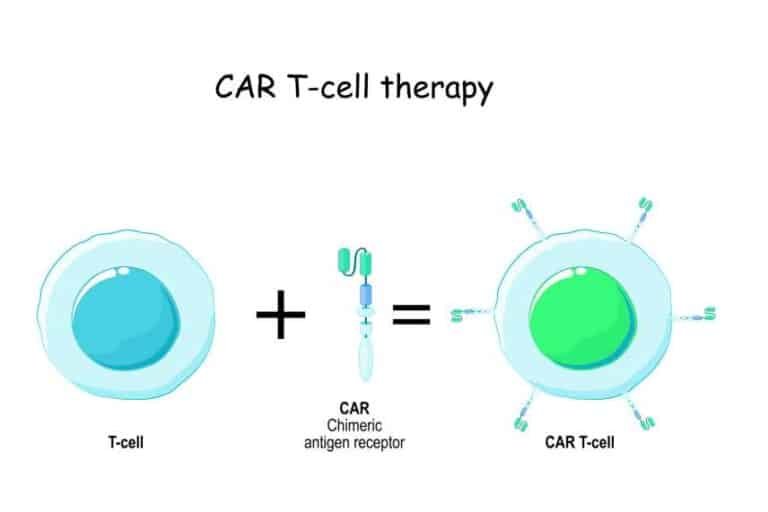
The journal Nature headlined last week “Cancer-fighting immune cells could soon be engineered inside our bodies” Because CAR T-cell gene therapy for cancer sufferers is so expensive ($800,00 per shot), risky, difficult to administer, laborious and time consuming to make. Researchers are pushing the boundaries hoping to re-engineer the body’s own cells to produce novel cancer fighting capabilities using mRNA technology. What could possibly go wrong?
The terminology of biotechnology research is a ‘dead’ give away. An article in the Guardian headlines “‘Inverse vaccines’: the promise of a ‘holy grail’ treatment for autoimmune diseases“. Which describes the ‘hope’ or is it ‘hype’ of some researchers that the genetic suppression of parts of the immune system will cure a multitude of diseases. Really??? Suppressing the immune system will cure disease and there won’t be a downside??? Note the use of the word ‘promise’ and the reference to the myth of the ‘Holy Grail’ which brings to mind a fruitless search through the ages for something that may not exist, over which bloody battles were fought.
An article in the UK Telegraph entitled Mental health sick days soar by 5m in just a year should give us a heads up. “Staff took a record 20.5m days off because of mental health conditions including stress, anxiety and depression in 2024, according to the UK Office for National Statistics, up from 14.8m in 2023.” Consciousness is not divorced from our physiology as biotech proponents assume. Altering the fundamental genetic processes of a whole population can have unforeseen yet drastic mental health consequences. No worries for the culprits though, there is nothing currently in law to ensure that anyone is required to ask WHY? or HOW?
Despite the obvious need to investigate what is causing this massive shift in mental health outcomes, the doctrine of materialism protects those responsible from self doubt or any need to be restrained or judged. Currently at least 33 self-amplifying mRNA injection candidates are in development worldwide. Arcturus Therapeutics’ COVID-19 replicon injection (ARCT-154) has already been approved in: India (June 2022), Japan (November 2023) and the EU (February 2025). According to many researchers, self amplifying vaccines have the capability to automatically spread through populations.
“Spreading through populations” is music to the ears of military strategists doggedly preparing for the end of the world. As reported by Technocracy News “Last week, the US Defense Advanced Research Projects Agency (DARPA) put out a Request for Information (RFI) seeking information regarding “state-of-the-art capabilities in the simulation of disease outbreaks.” Including of course: “model lockdown, social distancing, vaccination & messaging strategies”. The RFI also asks participants “How are fatality rates and varying levels of population immunity (natural or vaccine-induced) incorporated into your simulations?” This obviously points to plans to use such failed strategies again on populations in the near future.
End of the world thinking seems to go hand in hand with the rise of mental ill health among the working population. The UK Telegraph headlines “How Britain’s biggest companies are preparing for a Third World War“. It reports that bosses want to ensure their companies can survive if ongoing conflicts ignite the global tinderbox—AKA a nuclear war. How people started to think global business will survive a nuclear war I can’t imagine. The acceptance of the unthinkable as an everyday problem of business in the modern world is almost a definition of the kind of insanity that has engulfed collective consciousness since 2020.
If you are feeling overwhelmed as I often am, take comfort from an article in the journal Risk Analysis entitled “Island refuges for surviving nuclear winter and other abrupt sunlight-reducing catastrophes“. It rates New Zealand and Australia as the places best placed to be able to weather a global catastrophe such as the mass crop failures following a nuclear war or a gigantic volcanic eruption. A caution though, we might have to start making 100% of our own stuff.
However you read current geopolitical trends and the trail of catastrophe that has dogged biotechnology experimentation, it is clear we are heading for a global transformation. Whether this is a life changing disaster or a positive phase transition is entirely up to us. By that I mean we have the power in our own consciousness to transform individual and collective life. For a forest to be green the trees have to be green. For peace to reign, individuals have to be at peace. For collective intelligence to dawn, individuals have to be alert. For the supermarkets to sell healthy food, we have to reassign our buying power at the till by making individual healthy food choices. This has to be a mass movement. All mass movements begin with individuals who are unafraid and unembarrassed to speak and act the truth. Consciousness is the greatest power in the world. It is time to rediscover that power inside ourselves.
There is little doubt that the world is in the process of transformation. Clearly a lot has to change.
All over the world significant numbers of people in every country are fed up with their governments and the institutions which have been guiding national life. This process accelerated during the pandemic as it became clear that a great deal was being hidden or distorted to facilitate public compliance. Now there is a process of public awakening slowly gaining momentum, but the actual course and final outcome of this restorative process remains hidden in the future, subject to uncertain events.
The pace of life and the density of information in every field of knowledge and endeavour has been accelerating exponentially. This has become so overwhelming that politicians and administrators everywhere have put up barriers to exclude broad-based information sources from their deliberations. Instead relying on their preferred advisors, economic principles, corporate lobbyists, political ideologies and crucially AI. As a result, the idea that the world can be transformed by presenting information to those in power has become a largely forlorn hope. We need new strategies.
To manage the explosion of information, technocrats are touting artificial intelligence, but computers are unaware, unable to experience in the way we do. They can only sample and summarise large amounts of information from the past. Therefore AI is destined to rehash all the failures of the past. Repeating the same mistakes that awakening populations are rejecting the world over.
Worse still, governments have started to use AI to distance themselves from public opinion. An article in Stuff is entitled “ACT leader David Seymour suggested ‘bots’ drove ‘fake submissions’ against his Regulatory Standards Bill“. Seymour was complaining because a public consultation received 23,000 submissions, 88% of which were opposed. Seymour has no evidence to support his accusation, he should have realised that, especially since the pandemic, the public is becoming more organised and alert to oppose government overreach. The really revealing part of the article is as follows: The Ministry for Regulation deputy chief executive of policy Andrew Royle admitted the ministry used AI to analyse the submissions received, saying:
“Its process included a “qualitative” analysis of about 1000 individual submissions. Group submissions and submissions over 10,000 words were read separately. The rest were summarised using AI.”
In other words, your submission to the government was very unlikely to be read by a human unless it exceeded 10,000 words, and this is just the beginning of the use of AI to control our lives and edit public narratives.
In parallel with this, our food sources and health systems are being edited and transformed through biotechnology experimentation and manufacturing. This is proceeding on a vast scale affecting the whole world’s population. It is happening not just without adequate safety testing, but despite evidence available to those controlling the process that gene editing is not just risky, but actually harming public health. Much of this is happening under the radar with the result that the public is not just uninformed, they are being misinformed and misled.
There are seeds of doubt emerging—Biotechnology is a ticking time bomb
Your local newspapers are probably not carrying articles like this one published May 27 by Barrons Investment Updates entitled “Gene Therapy Death Worsens Picture for an Already Troubled Field” which reports the death from treatment complications of a patient enrolled in a trial of gene therapy which was meant “to treat a rare genetic condition called Danon Disease, which weakens the heart muscle and generally kills male patients in early adulthood.” The trial has been suspended and the share price of the company involved, Rocket Pharmaceuticals of New Jersey, has fallen by 63%.
As the article explains, this is not an isolated case within the biotech industry. Another recent death occurred in March, when a patient on Sarepta Therapeutics’ Elevidys, an approved gene therapy for Duchenne muscular dystrophy, died of liver failure. The process of gene therapy alters genetic sequences which triggers an immune response designed to protect us by eliminating invasive foreign DNA. As a result, gene therapy recipients inevitably face a lifetime of immunosuppressant drugs which affect their health, limit their lifespan and require hugely expensive ongoing monitoring and treatment. Thus gene therapy has inherent contradictions. Not only will gene therapy never be able to fulfil its exaggerated promises, but it will have an open ended negative affect on public health outcomes, as happened during the pandemic
The Barrons article concluded, “gene therapies have become largely unattractive to investors, who are worried about unexpected safety risks and commercialisation challenges”. In fact, the procedures are so costly, not just in terms of money but also in terms of the required number of highly trained medical personnel and sophisticated equipment for each patient and the amount of procedural individualisation involved, that it is inconceivable for any health system to fund them. The article reports that as a result medical biotech companies are finding it hard to enrol patients.
However our politicians remain largely isolated from the harsh realities and risks of biotechnology. Instead, subject to lobbying from corporate interests and researchers dependent on government grants, they are deregulating biotechnology. If biotechnology experimentation is not stopped, inevitably within a short timescale there will be another outbreak of a novel man made illness that causes a precipitous decline in mental and physical health on a global scale.
The extraordinary refusal to acknowledge the dangers of biotechnology needs to be met head on. An article in the UK Telegraph entitled “It’s time for the truth. Here’s the Covid Paper they don’t want you to read” reports “Still the scientific establishment is refusing to take the lab leak hypothesis seriously, let alone investigate it.” It asks the scientific establishment: “There are over 20 million people dead, and you don’t want to know why?”
There are still chances for us to register our opinion on the Gene Technology Bill, for example by signing and sharing the “Petition of Lisa Er: Halt the Gene Technology Bill and set up a Commission of Inquiry.” It just takes a minute to sign, and we need more signatures. Go to:
To have even more impact ask for a meeting with your local MP.
But some words of caution are needed here, we are not involved in a logical argument. There is an almost fanatical and certainly reckless mentality associated with biotechnology experimentation. The industry constantly projects false messianic messaging of a bright biotech future promising long life, health and enhanced abilities, but there is no evidence for this in fact the opposite and the people pumping out the message are well aware of the lie. There is a disregard for public preferences, scientific caution and medical outcome data. Therefore it would be a mistake to believe that a compromise is possible with the biotech industry. It should be clear that very little meaningful dialogue is taking place. To move out of this danger zone, we need to take big steps. Little steps, meaningless discussions, compromise and delay only play into the hands of the biotech industry and ultimately spell disaster.
We need a giant leap forward
Over the last few weeks we have been reflecting: “What more can we do?”What can our proposed Hill Station College of Natural Law offer to dispel the head in the sand attitude of governments, bypass the biotech corporate juggernaut and open the eyes of gaslit populations?
Despite all the turmoil and polarisation in society, the sun rises every day anew, the seasons revolve one into another and the business of natural law continues unabated. The managing power involved is beyond our comprehension. A simple analogy will explain this.
Every day we are eating food. To digest this, our physiology makes trillions of decisions for us every second of the day, it guides physiological transformations which turn our meals into bones, muscle, blood, brains, organs and everything else which sustains and facilitates our life. Doing so, it maintains the enormously complex structural integrity of trillions of physiological components. Even the design of an eye for example is beyond our capacity to completely understand, reproduce or redesign. Now let us suppose we receive a 1000 piece jigsaw for our birthday, it will take us days to complete. Our body achieves millions of times more than this every millisecond. Cosmic law scales this up to inconceivable levels of organisation.
Despite this, the body cannot function properly without the input of our consciousness. We must make the right food choices, rest and exercise in time, while behaving sensibly and considerately. Natural law is intimately tied to our consciousness. Consciousness is the key to our relationship with nature. Gaining the support of natural law involves managing our consciousness. Consciousness is the essence of life, but what facet of consciousness? Our thoughts, feelings, ideas or dreams?
The home of the laws of nature is abstract, not obviously seen or heard, rather silent but all powerful. Our connection with the laws of nature can be strengthened in the silent depths of our consciousness. Communion with nature is not found in the endless sea of information, but rather in the abstract WHOLENESS of our inner consciousness. Holistic consciousness is the fulcrum point around which everything is balanced.
Therefore the first principle of the College of Natural Law is research in consciousness. Throughout the ages this has been the aim of the practice of meditation. The practice of meditation has nourished all cultural, intellectual and religious traditions. If you are new to the idea of meditation, it is not hard to learn, and the rewards can be immense for the individual and very powerful for society.
The massive effect of meditation on society is reported in my paper published in Psychology, Crime, and Law, 2:3, 1996. The research was completed originally in 1993 and presented by invitation as a keynote speech to the Annual Conference of the British Psychological Society on Crime, 1-3 March 1993, Harrogate, UK. The study provided additional clear and powerful evidence that crime in any major city can be reduced within a few weeks by a group practicing meditation. The powerful Box-Jenkins ARIMA impact assessment time series analysis was used to test the hypothesis that Merseyside crime rate was significantly reduced after what is known as the Maharishi Effect threshold was surpassed by a group of 140 collectively practicing transcendental deep meditation and 12,000 others in the city practising at home. My book Your DNA Diet explains the details and more about the benefits of meditation.
My follow up study of quality of life in Merseyside in the years subsequent to 1988 illustrates a remarkable cascade of positive trends and initiatives engulfing everyday life in the city of 1.5 million people. The following effects illustrate the infinite organising power inherent in our own consciousness:
1) LOWEST CRIME
Crime decreased by 60% relative to national trends (p<0.00006). Merseyside used to have the second highest crime rate in the nation, but became the lowest among the Metropolitan areas by 1993.
2) REDUCED INSURANCE PREMIUMS
The Association of British Insurers announced that insurance premiums in Merseyside will fall due to falling crime rates
3) SHORTEST HOSPITAL WAITING LIST
By 1990 hospital waiting lists in the Merseyside Health Authority Region had fallen to the lowest in the UK, with numbers of people having to wait for vital operations 60% less than in the other UK regions.
4) FREEDOM FROM YOUTH RIOTS
There was an absence of riots among Merseyside youth in the early 90’s in contrast to the riots in other English cities (including Luton, London, Oxford, Salford, Cardiff, and Bristol)
5) IMPROVED DRUG TREATMENT PROGRAMMES
Merseyside became the world pioneer of the ‘harm reduction movement’ for the treatment of drug addiction and had the lowest rate of HIV positive among UK cities.
6) ECONOMIC REVIVAL
Formerly declining, Merseyside became a model of economic revival. The national press reported it as one of the first cities in the UK to show signs of an end to the 89/92 recession.
7) REDUCED UNEMPLOYMENT
Unemployment rates in Merseyside and West Lancashire improved steadily relative to national trends after 1988 with a cumulative 60% drop in hard core unemployment.
8) INCREASED EFFICIENCY AND PRODUCTIVITY
The UK Central Statistical Office rated Merseyside office staff as 20% more productive than their counterparts in London.
9) REDUCED STRIKES
Merseyside was once renowned for poor industrial relations, but by 1993 less than 1% of all working days lost in the UK were in Merseyside, despite the fact that almost 3% of the UK population live here.
10) PURIFICATION OF LOCAL GOVERNMENT
There was a complete purification and restructuring of the Liverpool City government which had previously been reported as one of the most extreme, inept, and corrupt among UK cities in the early 1980’s.
11) NEW BUILDING PROJECTS
Reconstruction and beautification of the inner city and the large old dock areas of the city got underway, which had been one of Britain’s worst slum areas in the late 1970’s.
12) IMPROVED HOUSING
Following years of decline in housing quality in the 70’s and early 80’s, the Liverpool Housing Action Trust became the largest in the country.
13) REVIVED ENTERTAINMENT AND TOURISM INDUSTRY
There was a revival in film production, theatre, and tourism which had been in serious decline in the late 70’s and early 80’s. Numbers of visitors to Merseyside were up by 53% to 29 million in 1990 compared to 1985.
14) SPORTING SUCCESS
Teams from the North West of England dominated in many sporting events in the early 1990’s.
15) BALANCED SEASONS & ADEQUATE RAINFALL
Merseyside escaped the droughts of 1988 to 1989. The North West was reported by the local press as the only area in the country to have adequate rainfall during this period.
16) INCREASED HARMONY & CO-OPERATION
A unique level of co-operation and harmony along with increased optimism and self-confidence was in evidence on Merseyside among public and private sector bodies. The Merseyside Partnership brought together over 40 organisations to promote progress in the region.
17) INCREASED HAPPINESS
A psychological study completed in the early 90’s at Liverpool University rated Merseyside pensioners as having 50% less depression than their counterparts in New York or London.
18) INCREASED ENVIRONMENTAL AWARENESS
In the first project of its kind in Europe, forty local organisations working together in the Estuary Project Group reduced the pollution load in the Mersey Estuary by 80%, enabling wildfowl numbers to increase by 60% and 35 species of fish to return.
19) HEALTHY LIFESTYLE
A unique experiment in the Wirral (a suburb of Merseyside) was described in the national press as ‘a rare piece of co-operation in the public sector’. Under the ‘Life Project’ initiative, inner city residents took more exercise, reduced use of prescription drugs, stopped smoking, cut back on drink, and changed their diet.
20) QUALITY OF LIFE
There were many articles in the local and national press analysing why all this optimism and positivity suddenly grew up in Merseyside. An article in the Daily Mail summed it up with the headline “Merseyside is my Heaven on Earth”, in the Daily Telegraph “A Good Place With Good People>” (June 13, 1995 p. 15), while an industrial development promotional advertisement in the Times of London (13 November 1991) trumpeted “Success After Success On Merseyside”.
Consciousness is at the centre of the Cosmos. This is an eternal verity found in every cultural and religious tradition. Christ said “the Kingdom of Heaven is within”. Krishna advised “Brahman [wholeness of consciousness] brings eternal freedom”. Buddha said, “Peace comes within, do not seek it without”.
Sufi’s say, “Meditation in God is my capital”.Einstein said “Man has infinite dimensions and finds God in his conscience.” Ralph Waldo Emerson said “Trust thyself: every heart vibrates to that iron string.” Seneca said“It is the power of the mind to be unconquerable. ”Marcus Aurelius said “You have power over your mind – not outside events. Realise this, and you will find strength.””
Despite this wisdom of the ages, the institutions of modern civilization (if that is the right term) have forgotten their founding principles. A great leap forward will result when research in consciousness becomes a priority in education. We are talking here about individual research in consciousness in the silent depths of self referral consciousness.
An article in the UK Telegraph this morning comments on the cover up of Biden’s cognitive decline saying:
“The ability to have some trustworthy sources in the world does matter – and will matter an awful lot more in the years to come. The media that helped cover up Biden’s condition should take a serious and critical look at themselves – even though it’s not clear that self-criticism is something of which they are remotely capable.”
Unfortunately untrustworthy sources are not limited to the media. A paper published in the Journal of Independent Medicine is entitled “Metacritique of Influential Studies Purporting COVID-19 Vaccine Successes: Part 1 – Watson et al” which concludes that the risks of Covid vaccines outweigh any perceived benefits, saying one highly cited study, relied upon by health services, falsely purported to show Covid vaccines saved 14 million lives:
“[The study included] the use of inaccurate estimates of effectiveness and safety due to inadequate counting windows; lack of recognition of waning effectiveness and eventual negative effectiveness; failure to account for confounding variables; exaggerated infection and case fatality rates; insufficient consideration of vaccine-related risks; and possible financial or political conflicts of interest.”
Search engines which employ AI are another source of unreliable and biased information, or rather misinformation. Last week I used Google to try to find out if the official March 2025 figures for New Zealand births and deaths had been published. Google AI overview told me:
“In March 2025, New Zealand saw a 7% increase in both live births and deaths compared to the same month in 2024. There was a natural decrease, with 584 more deaths than births. The average daily birth rate was 44, while the average daily death rate was 63.”
This answer is entirely false, in fact the New Zealand March figures had not been published and AI, ever eager to speak with authority, simply substituted the latest Slovenian data for that of New Zealand. The current standard AI search engines which provide one sentence answers to complex questions, which may be inaccurate simplifications or even false, are going to be a greater and greater curse on our education system as time goes by.
Believing in one thing to the exclusion of many, thinking that a single winner is the only person worthy of praise and reward, maintaining faith in something that doesn’t work or for which there is no evidence, posing as an expert on something about which you know little and pretending to certainty when there is doubt are all symptoms of a failure of intelligence. This arises when the knower pays attention to a PART of a problem but fails to appreciate the WHOLE picture.
Last week there were articles in papers around the world like one in the NY Times entitled “Baby Is Healed With World’s First Personalized Gene-Editing Treatment“. A nine month old baby known as KJ suffers from a rare genetic disorder which affects only one out of 1.3 million babies and is usually fatal. A customised gene editing intervention has saved his life for now. I don’t want to debate the merits of a life saving procedure which has so far cost many millions of dollars and has left the child dependent on the attentions of a team of doctors for the rest of his life, but I do take issue with Dr Peter Marks, the recently replaced director of the US FDA Centre for Biologics Evaluation and Research, who claims in the New England Journal of Medicine that the procedure will “transform healthcare”.
170 million Americans are suffering from one or more chronic diseases and a senior medic is suggesting that a risky gene therapy technique costing multi million dollars per person and requiring the lifetime attention of many doctors per patient will transform healthcare. Such a view is not just myopic, it combines blind faith, professional conceit, corporate greed and disregard of the glaringly obvious—gene editing will not solve the crisis in public health. On present evidence it is more likely to exacerbate it.
Far far more likely to transform healthcare is a story published in the UK Telegraph entitled “Eat three yogurts a day and other secrets from the woman who lived to 117. This reports the findings of a study of the exceptionally healthy gut biome of a supercentenarian published under the title “The Multiomics Blueprint of Extreme Human Lifespan. “Individuals with a greater variety and “balance” of microbes in their gut seem to have a lower risk of experiencing around 70 different chronic conditions, ranging from heart disease to Type 2 diabetes, as each type of bacteria or microbe does something different for the body.” The subject of the study who lived in California ate three yogurts a day, had a diet rich in fruits and vegetables, exercised regularly, cut down on alcohol and avoided toxic people.
If you are going to start eating yogurt, remember to avoid the processed flavoured and sweetened versions that crowd our supermarket shelves, research shows they are unhealthy. Organic plain yogurts are available and it is very easy to make your own fresh yogurt overnight at home—the healthiest option.
Complementing this, the American Journal of Preventive Medicine has published a study entitled “Premature Mortality Attributable to Ultraprocessed Food Consumption in 8 Countries“. This reports “Each 10% extra intake of UPF, such as bread, cakes and ready meals, increases someone’s risk of dying before they reach 75 by 3%”, according to research conducted in countries including the US and England. This adds to a growing body of evidence that UPFs are a fast track to an early death. For example, US research published last year in the BMJ found that people who consume the most UPFs have a 4% higher risk of death overall and a 9% greater risk of dying from something other than cancer or heart disease. It identified processed meat, sugar and ultra-processed breakfast foods, such as cereals, as the unhealthiest UPF products.
You might think that faced with such overwhelming evidence, government health experts would be rushing to warn the public about UPFs and incentivise healthy eating. In fact, governments the world over seem to be suffering from extreme myopia. A May 17 article in the UK Guardian is entitled “UK government dropped health push after lobbying by ultra-processed food firms“. This recounts the sorry tale of how planned government advice to supermarkets to prioritise promotion of fresh produce and drop promotions of junk food was abandoned after lobbying by the Food and Drink Federation (which represents corporations including Nestlé, Mondelēz, Coca-Cola, Mars and Unilever), repeatedly demanded the government ditch the healthy initiative.
These are the very same corporations who have been very busy substituting the natural ingredients in our traditional foods with genetically modified processing aids which contain harmful contaminated residues, as we reported in our article “Major Health Alert: the Extraordinary Genetically Modified Invasion of Our Supermarkets by Stealth“. As the 117 year old supercentenarian advised: ‘it is sensible to avoid toxic people’ and that goes for the glossy products of toxic corporations too. As consumers, we have more power than we realise. Time to STOP putting UPFs in our supermarket carts.
Our government is planning to deregulate biotechnology experimentation, putting millions of our taxpayer dollars into risky biotech research whose inevitable mistakes cannot be recalled or remediated, while proven measures to greatly improve public health which can be easily implemented with virtually no cost and managed at home go unnoticed, unheralded and unsupported. This is all the result of an education system which is failing the young who are the future leaders of society. Overwhelmed with an explosion of technology, people are gradually losing the capacity to think clearly and comprehensively. We are being bombarded with messaging tailored to influence our financial and political choices touting the very latest fad over simple, cheap, traditional tried and tested solutions. This war on common sense, nature and tradition is increasingly being designed by inherently dumb computers with the aim of subtly usurping our cognitive abilities.
We may not appreciate the scope and size of the effects, but reaching for a calculator, accepting the answer of a search engine, media source, or government pronouncement uncritically, copying and pasting without thinking, letting AI write it for you, and putting something in our mouth without reading the label are all rendering our intellect inactive and rusty. Use it or lose it.
Outer depends on inner.
There is a deeper kind of technology fully available to all of us—a technology of consciousness. Reflective time spent in deep meditation or prayer is a means to revive and refresh our intellect, quietly integrating experience into a broader knowledge framework, connecting the PART with the WHOLE. Modern education with its focus on exterior technology and superficial ideas is debasing this possibility. The kind of society and times we are living through are the end result of ignoring our inner life. History records the rise and fall of civilisations. Invariably, it is the wide availability of deep spiritual and intellectual insight that drives the rise, and ignorance and cruelty that drives the fall. We are sleepwalking into the end times of our civilisation, because we don’t understand life, yet life is the closest thing to us. If you haven’t yet begun a personal journey to fully discover inner life, it is time to begin. As Wordsworth put it so beautifully in Lines Written Above Tintern Abbey:
“….that blessed mood, In which the burthen of the mystery, In which the heavy and the weary weight Of all this unintelligible world, Is lightened:—that serene and blessed mood, In which the affections gently lead us on,— Until, the breath of this corporeal frame And even the motion of our human blood Almost suspended, we are laid asleep In body, and become a living soul: While with an eye made quiet by the power Of harmony, and the deep power of joy, We see into the life of things.”
It would be a mistake to think that such deep insight comes upon us solely by chance. We have control over our behaviour and food, we can mostly choose what experiences we expose ourselves to. Our consciousness is our own to manage. Christ said the Kingdom of Heaven is Within, echoing the wisdom of the ages. St Francis found peace in nature and reflection, we can do so also. The Bhagavad Gita promises the natural result of the regular practice of deep meditation, saying “He whose mind is unshaken in the midst of sorrows, who amongst pleasures is free from longing, from whom fear and anger have departed, he is said to be a sage of steady intellect”. This is not a mood cultivated through indifference but the natural result of repeated experience of the transcendental bliss that Wordsworth described as he sat above Tintern Abbey. It is time we looked within and taught the next generation to do likewise. The collective effect of meditation on society is transformative and beneficial in a way that is unmatched by any modern technology. You can find out more about transcendental meditation and its effects on individual and collective consciousness in my book Your DNA Diet available from Amazon as a Kindle.
Sometimes life is actually very simple and the answers are staring us in the face, but someone is being highly paid to make the wrong answer sound preferable. There was a long article on Monday in Stuff newspaper entitled “Given months to live, a businessman looked overseas for treatment. Now he’s cancer free“. It was the first of a series of five to be published this week. The article describes the use of CAR T-cell therapy to treat lymphatic cancer. The author makes a pathetic attempt to give us a balanced view of the pros and cons, but unfortunately there are glaring omissions which invalidate the suggestion that CAR T-cell therapy is a miracle cure for our rising cancer rates.
The managing director of an Auckland construction firm fell suddenly ill during a family holiday in the Philippines and eventually was diagnosed with lymphatic cancer including a tumour the size of a football. When chemotherapy at Auckland Hospital failed to work, he was able to pay to travel to China to receive CAR T-cell treatment at a total cost of $600,000, (about 50% less than the equivalent cost in Australia).
The therapy involved extracting his white blood cells and then genetically modifying them to detect and consequently attack the cancerous cells that were aggressively multiplying in his physiology. The modified cells were multiplied in a bioreactor and then injected back into his body. Overall the process took weeks to complete and the current result is a happy one, the patient is in remission and beginning to participate in a more normal life. This kind of result is described as ‘revolutionary’.
A second Stuff article contains the tragic tale of a New Zealand policeman who unfortunately arrived in China too late to stem the tide of his cancer and died. The whole point of the series of articles is “to look at what it will take to embed CAR T-cell therapy into New Zealand’s health system”. Apparently biotech researchers believe that Kiwi ingenuity will devise a cheaper and better system and they want the government to press the green light for funding in order to make their company “the Rocket Lab of immunotherapy”. AKA they want more money.
So what is the bigger picture?
COST: CAR T-cell treatment is currently limited to lymphatic cancers, however there are plans to expand its application to other types of blood cancers. Currently there are approximately 28,000 people in New Zealand diagnosed with cancer each year, around 1,100 (4%) of them with lymphoma. The New Zealand health service spends $800 million each year on cancer treatment. If all lymphoma cases were treated with CAR T-cell therapy, the additional cost would be at the very least $660 million, all of it spent on just 4% of cancer cases.
EFFECTIVENESS: Cancer returns within one year in about half of CAR T-cell patients necessitating further treatment. The five year survival rate for recipients is around 40%.
SIDE EFFECTS: These can be severe and even fatal involving an over reaction of the immune system. This is one reason why the treatment involves a whole team of attending specialists for each patient.
An ounce of prevention is worth a pound of cure
The big question that the series of articles fails to address is the CAUSE of the rocketing number of cases of lymphoma. New Zealand has the highest rate of lymphoma in the world 12.5 cases per 100,000. The lowest rate in the world is Bhutan with 0.65 cases per 100,000, (about 20 fold less than New Zealand). So what does Bhutan have that we don’t?
Among these, the Bhutanese government actively supports organic agriculture. They have implemented a National Framework for Organic Farming since 2007 and have a goal of converting 100% of farms to organic production. The government’s commitment is evident in various initiatives, including the National Organic Flagship Programme and the designation of a National Centre for Organic Agriculture. The programme, worth Bhutanese Ngultrum (Nu.) 1 billion (or USD 12.8 million), is the largest fund in the world as a percentage of GDP dedicated to the organic sector. There have been challenges along the way, but the government is continuing to push ahead because the long term health and economic benefits are obvious.
New Zealand is going in the opposite direction.
The Ministry for Primary Industries (MPI) has announced its intention to raise the allowable glyphosate residue limits on food crops. There has been hardly a whisper in mainstream media, but make no mistake — this is a big deal. Read all about it at the No More Glyphosate website. The site goes into depth covering the serious health and agricultural issues. Public submissions (or more properly protests) close this Friday 16th May at 5pm and can be accessed through the site. A petition to parliament currently with 12,000 signatures is also linked.
The move to increase allowable glyphosate levels in our foods is inextricably tied to the deregulation of GM crops proposed by the Gene Technology Bill currently before parliament. Many of these crops will require increased use of Glyphosate, necessitating a raised residue limit.
We have a rapidly increasing incidence of cancers, our hospital system is overwhelmed, pesticide and herbicide use is suspected to be linked to cancer incidence and our government is planning to increase allowable residues. How mad is that? No, not mad, deliberately and criminally putting the commercial objectives of large multinational corporations ahead of public health.
When you are lost in the bush, what do you do? Try to retrace your steps, not madly plunge further ahead.
When a contractor fails to complete the work or deceives you, what do you do? Change contractors.
The current government appears determined to degrade our food supply. We are rapidly reaching a public health tipping point. There is no other sensible approach except wholesale rejection, determined opposition and a personal agenda to drastically improve our health habits.